

OSTrails organised its first Train-the-Trainer Bootcamp on 25 March in Braga, following a successful two-day General Assembly. The Bootcamp marked a key step as the project moves into its implementation phase, focusing on equipping organisations, trainers, and pilot partners to act as multipliers for the adoption of OSTrails results.
The session brought together technical experts, trainers, and pilot representatives in a highly interactive setting. Participants engaged directly with the teams developing OSTrails tools and services, gaining a practical understanding of implementation requirements, integration workflows, and training approaches.
Pilots and trainers worked closely with participants through group sessions and hands-on activities to explain the OSTrails reference architecture and interoperability frameworks, outline requirements for using the services, and demonstrate their practical application. These sessions fostered strong knowledge exchange and supported participants in preparing their own training activities.
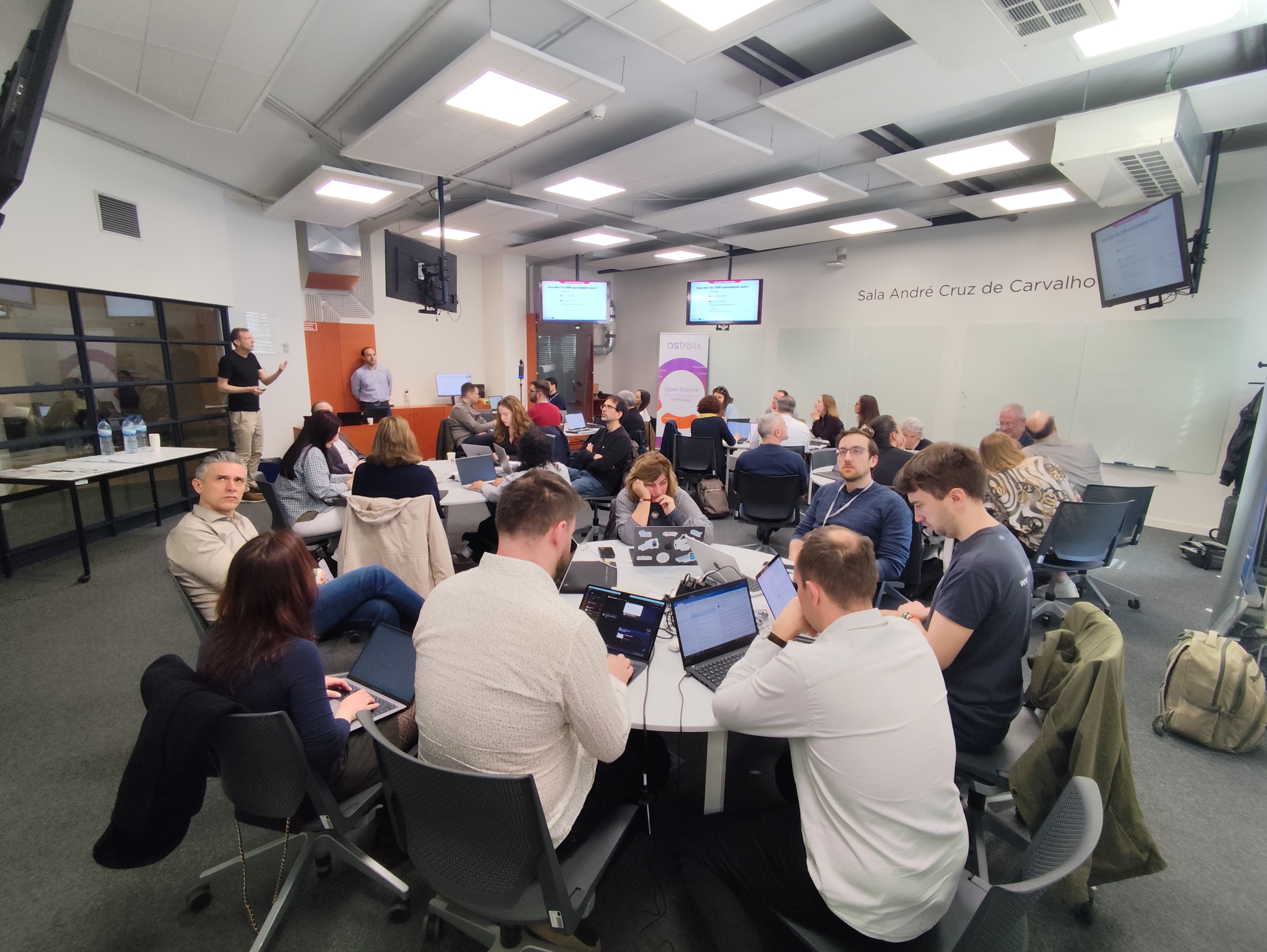
Core OSTrails results and tools in practice
The bootcamp focused on translating OSTrails concepts into concrete implementation practices.
Through hands-on sessions and group work, participants:
- Explored the OSTrails reference architecture and interoperability frameworks
- Learned how to adopt services within institutional and national infrastructures
- Tested real integration scenarios across tools and systems
- Prepared to deliver their own training activities
Across the different tools presented, a clear convergence is emerging: the focus is not on the tools themselves, but on their ability to implement shared, interoperable approaches. This enables information to move across systems, while keeping DMPs flexible and strengthening their role in structured evaluation and guidance on shared topics.
Learning from pilot implementations
The programme continued with a use‑case implementation session, allowing pilot partners to share progress on their pilots’ activities and engage with the technical staff to clarify questions. This exchange created space for practical discussions on how to apply OSTrails specifications in real settings, helping participants better understand how to move forward in their own contexts.
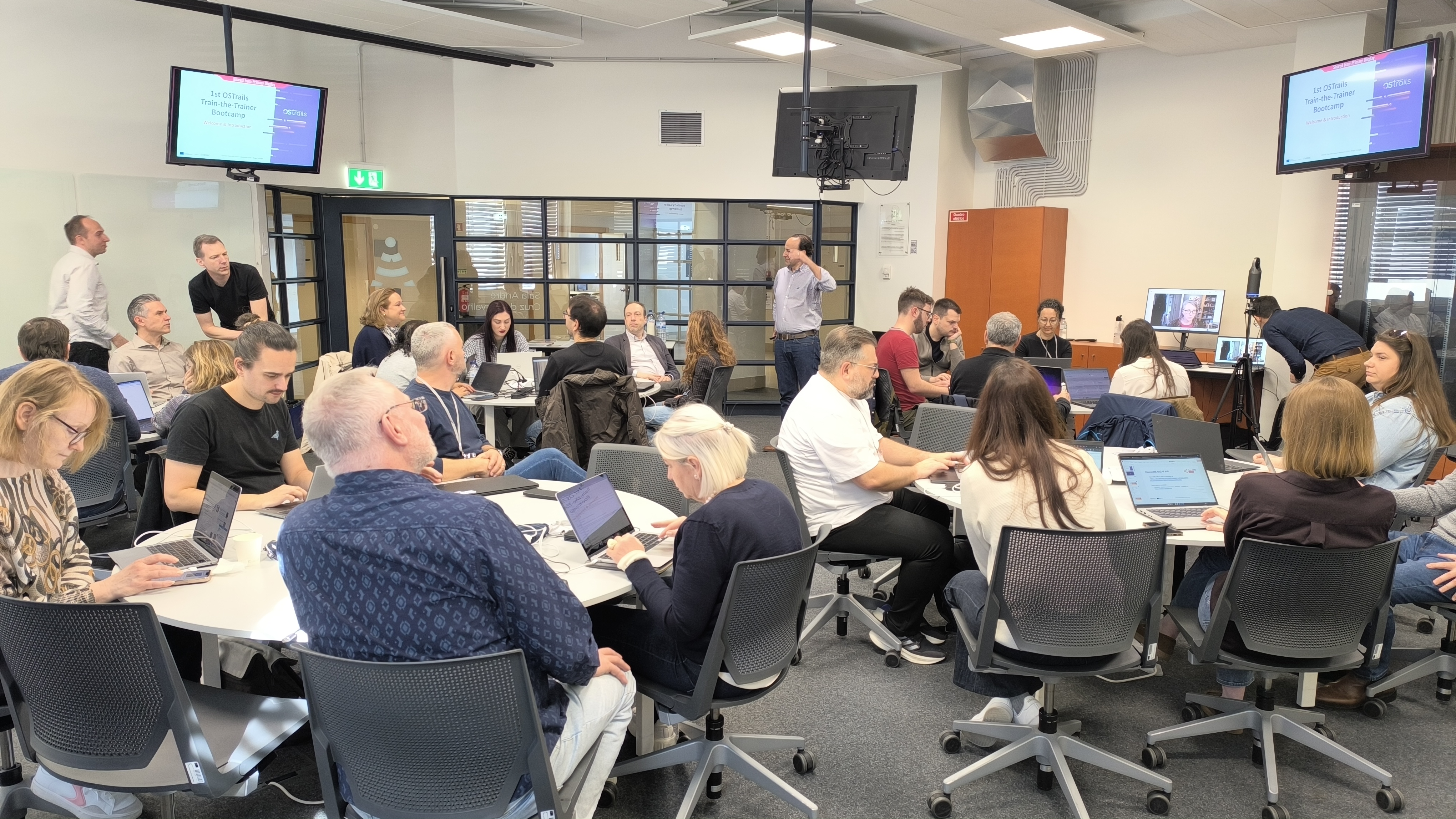
The discussion highlighted the diversity of pilot approaches and levels of maturity.
- Some national initiatives, such as those in Finland and Portugal, are building strong community engagement around shared DMP application profiles.
- Others, including Croatia and Greece, are working closely with funders to align implementations with national policies and requirements.
- At the same time, thematic infrastructures such as CESSDA and LifeWatch are focusing on improving and connecting domain services to support discovery and enhance the FAIRness of data.
Pilots also shared practical challenges encountered during implementation, such as staff turnover, and dependencies between tasks. These experiences underlined the need for flexibility and continuous coordination. At the same time, the discussions highlighted the importance of trust-based collaboration with national research support services and expert communities: Open dialogue, shared experiences, and ongoing outreach efforts were seen as essential for building momentum and supporting the broader adoption of interoperable solutions across DMPs, FAIR assessment, and research information systems.
Training Stations: working directly with tools and services
The bootcamp also included interactive training stations, designed to give participants direct access to the tools and services behind OSTrails.
Pilot partners and technical experts were positioned across dedicated stations, where participants could move between them, ask questions, and discuss their specific implementation needs. There were 7 stations covering key areas, such as FAIR assessment and validation, FAIR benchmarks and metrics, machine-actionable DMPs, DMP evaluation, and Scientific Knowledge Graphs.
Planning for local trainings
At the end of the bootcamp, pilots were challenged to develop and present their own training plans covering webinars, workshops, and hands-on sessions, tailored to different audiences, including researchers, data stewards, and service providers.
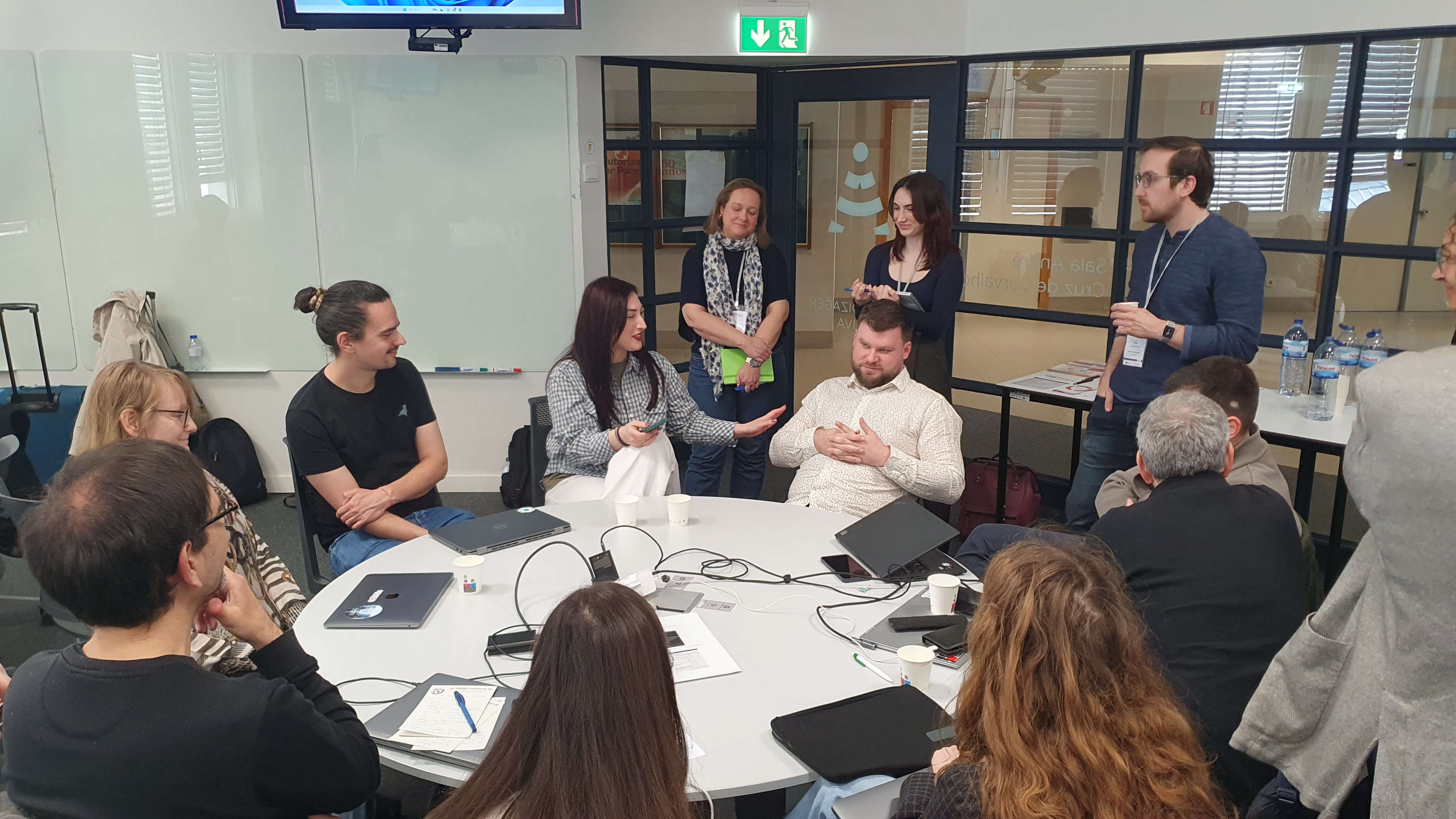
A strong emphasis was placed on reusing and adapting training materials to fit local needs, while enabling participants to act as multipliers within their organisations. This marked a shift from learning to active rollout, with pilots preparing concrete activities to be delivered across the consortium over the coming year. Planning for the second edition of the Train-the-Trainers Bootcamp will begin soon.
All training materials, resources, and updates will be made available at the following link: Bootcamps - OSTrails


