

On 5 February 2026, OSTrails participated in the EVERSE Community Engagement Event at CERN, Geneva. Elli Papadopoulou (Athena Research Center) presented the work on τηε OSTrails Commons to an audience of Research Software Engineers, researchers, and open science stakeholders from across Europe’s five EOSC Science Clusters.
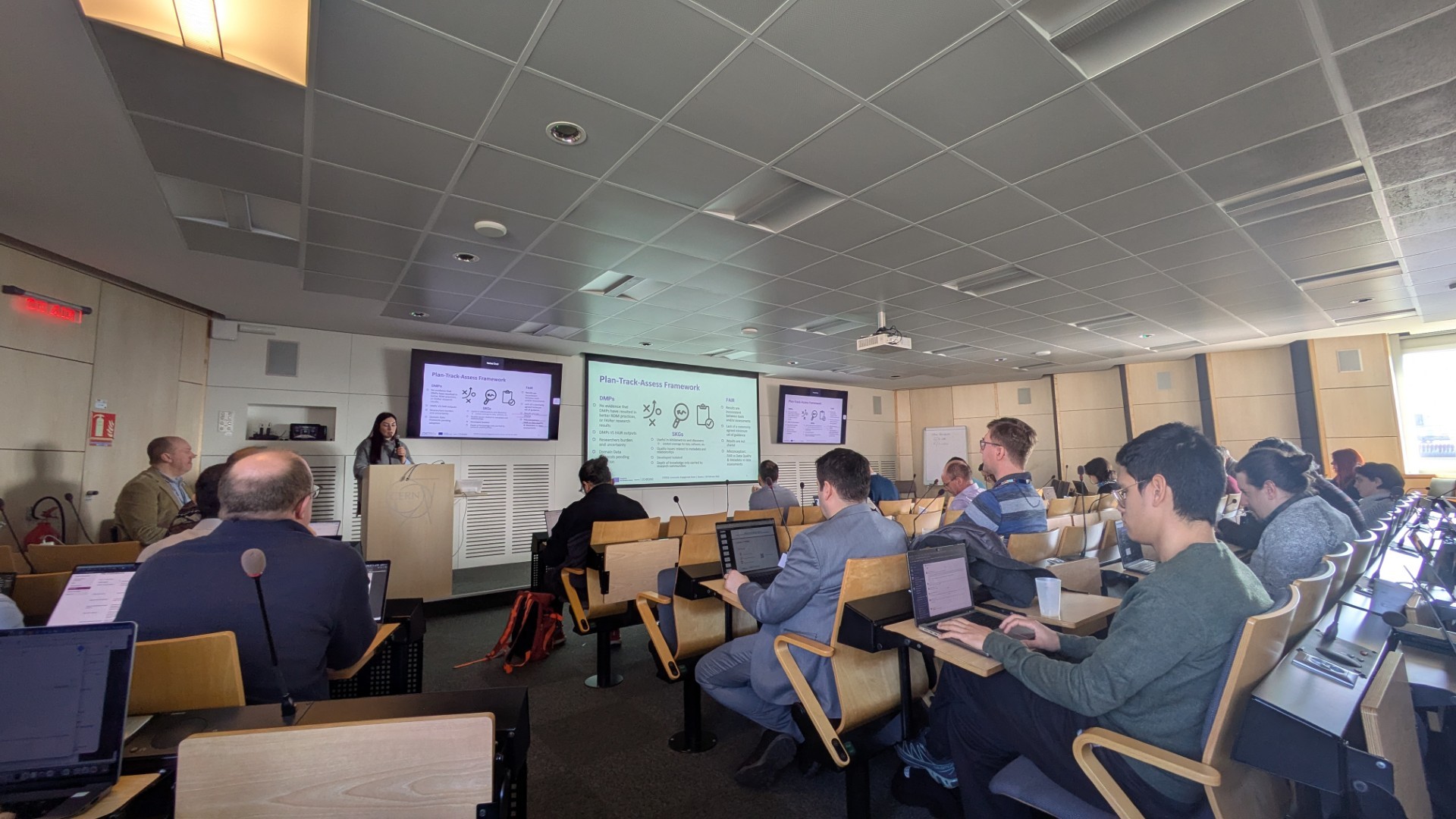
EVERSE is a fellow Horizon Europe project building a European network for research software quality. The connection between the two projects runs deeper than a shared funding programme: Daniel Garijo (Universidad Politécnica de Madrid) is an active contributor to both, bringing tools he has developed — notably FOOPS! and FAIR-OS — that are integrated into OSTrails’ FAIR assessment work while also informing EVERSE’s software quality framework. His involvement has been instrumental in ensuring that knowledge, approaches, and emerging standards flow actively between the two teams, and meant the conversation at CERN built on an already established foundation rather than starting from scratch.
EVERSE Notable Results
The event showcased key exploitable results from the EVERSE project. Two stood out as particularly relevant to the OSTrails community.
- The RSQToolkit is a curated collection of tasks, tools, research software stories, and resources designed to support repeatability, reproducibility, and trustworthy software development and maintenance.
- The TechRadar is a visual dashboard built on the RSQToolkit, helping practitioners navigate and apply its guidance in day-to-day software development work.
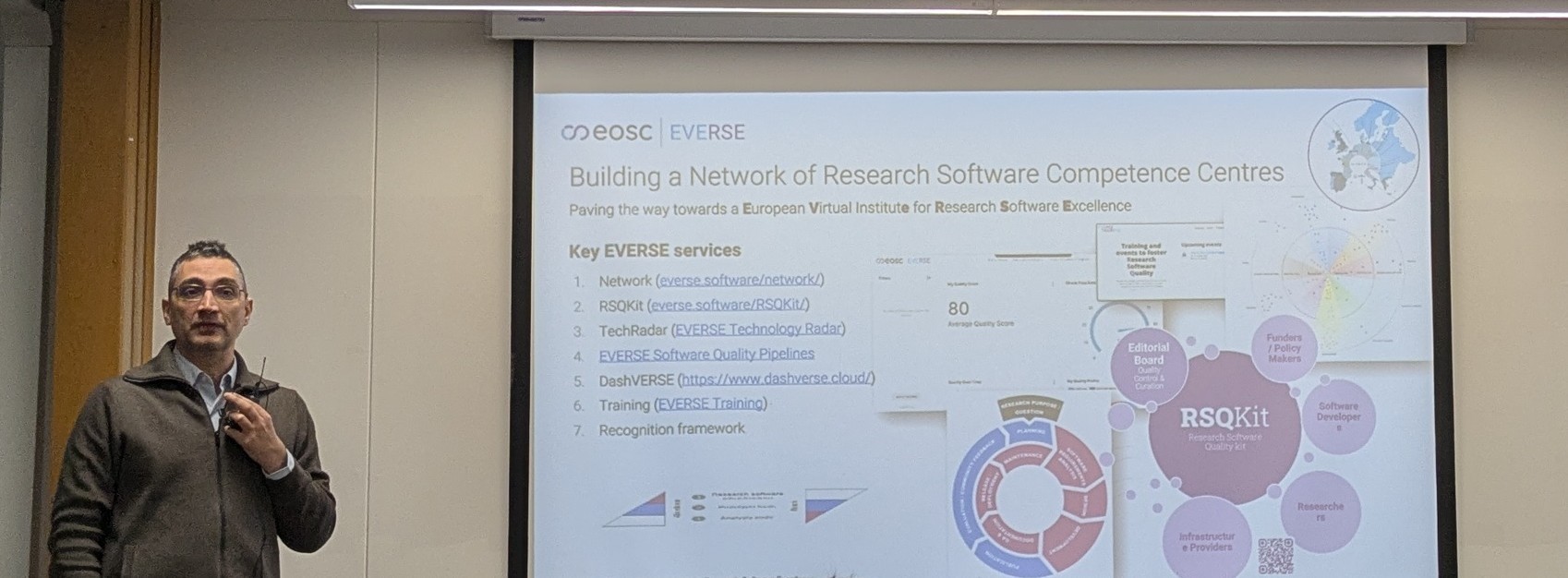
Together, these outputs represent EVERSE’s approach to making software quality guidance actionable and community-driven.
OSTrails for open (source) research software
Our presentation focused on three areas of the OSTrails work most directly relevant to the research software quality community.
The Plan-Track-Assess Interoperability Frameworks and Commons: the standardised, open specifications that enable different tools, platforms, and communities to exchange information about data and software management in a consistent and machine-actionable way. We presented concrete examples of how these commons operate in practice across OSTrails pilots.
The DMP Evaluation Service, currently under active development as an open source project. This service enables automated assessment of Data Management Plans, including software (management) components, checking completeness and alignment with FAIR principles, and making DMP quality measurable and comparable at scale.
Software quality in OSTrails through two dedicated frameworks:
- theFAIR Assessment Interoperability Framework (FAIR-IF), which provides a standardised vocabulary and reference model for producing consistent, comparable FAIR assessments across tools;
- and the SKG Quality Toolbox, which connects entities like source code, workflows, scripts, and containers to the broader research ecosystem through our Scientific Knowledge Graph Interoperability Framework, making software contributions traceable, assessable, and creditable across the research lifecycle.
| The OSTrails FAIR assessment tools, built in alignment with the FAIR-IF, are openly available at: ostrails.eu/fair-assessments |
Key points for collaboration
The discussions at CERN highlighted how two projects with distinct mandates can find genuine points of exchange.
| EVERSE is focused on research software quality in its full breadth — reproducibility, trustworthy development practices, coding standards, long-term maintenance. | OSTrails is focused on interoperability: the frameworks, specifications, and commons that enable tools and communities to plan, track, and assess research outputs consistently. |
The two meet in what each identified as valuable in the other’s work: OSTrails’ FAIR assessment dimensions and software metadata quality indicators are directly relevant to how EVERSE measures and communicates software quality, while EVERSE’s quality guidance and metrics offer OSTrails a richer picture of what software quality means beyond FAIRness alone. Sharing metrics, aligning indicators, and building on each other’s open specifications is a natural next step.
The RSQToolkit’s quality guidance is a natural input to FAIR assessment: the indicators EVERSE has developed could be expressed as machine-actionable FAIR tests within the OSTrails FAIR-IF, enabling consistent application and cross-domain comparison. The TechRadar, as a structured catalogue of tools and practices, maps naturally onto OSTrails SKG Quality Toolbox — both are concerned with making software quality visible and navigable.
On the planning side, the DMP Evaluation Service and the OSTrails DMP Interoperability Framework offer EVERSE communities a path from informal software quality practices toward structured, interoperable Software Management Plans — connecting quality intent to verifiable evidence within the EOSC research infrastructure.
| We look forward to identifying concrete next steps for aligning specifications, tools, and community engagement! |
All OSTrails resources are openly available at docs.ostrails.eu and github.com/OSTrails.


